Posts mit dem Label Übungen 5 (Termine) werden angezeigt. Alle Posts anzeigen

Dienstag, Februar 08, 2011

Day 30. Sich verabreden - ein Rollenspiel vorbereiten

Here are some words and phrases that I learned today.

Entschuldigungen/Ausreden: 
„Warum bist du spät?‟

Sätze

„Entschuldigung, aber ich war im Stau.”
„Entschuldigung, ich hatte keinen Stadtplan.”
„Enstschuldigung, ich hatte keine Uhr.”
„Entschuldigen SIe, dass ich zu spät komme. Mein Zug hatte Verspätung.”
„Tut mir leid, ich bin zu spät. Mein Auto war kaputt.”
„Tut mir leid, ich habe den Termin vergessen!”

✎ My personal wordbank: To have in past tense.

Indikativ
ich
du
er/sie
wir
ihr
sie/Sie

Präteritum
hatte
hattest
hatte
hatten
hattet
hatten


Donnerstag, Februar 03, 2011

Day 29.Tagesablauf und Termine

Verabredungen. 


Our lesson for today was about setting up appointments. This can be quite confusing as accusative and dative cases come into use. As previously discussed in German 10, the German language use four cases: nominative, accusative, dative, and genitive. For this chapter, we focused on accusative and dative cases.


Aside from understanding German prepositions, the German cases gives me headache. So, to put simply, German cases are concerned with nouns since the nouns in German have genders: the definite articles der, das, die, as well as the indefinite articles ein, eine and kein, keine all depend on the gender of the noun, adjective, and verb it precedes.


Der Akkusativ.
In English the accusative case is known as the objective case (direct object). In English, we learned that  direct object is the receiver of the action. It can be nouns, pronouns, phrases, or clauses. It answers the question "What?" or "Whom?" after an action verb. The German accusative case only changes in the masculine gender, meaning we don't need to worry about the feminine, neuter or plural for the moment.
Example: Ich habe eine Buch. (I have a book).
✔ It answers "what" I have.
✔ Book in German is masculine, therefore, der Buch will become ein Book since it is indefinite. In the accusative case, it will be einen Buch. (Note that all German nouns are capitalized, regardless if proper, common or collective nouns. The only exception would be the pronouns with the exception of "Sie", the formal form of you.) Rules, rules, rules. I must know them by heart!!!


Time expressions in a sentence are usually in accusative: jeden Tag, letzten Sommer, den ganzen Tag, diesen Abend, whole nächst- next letzt- last vorig- last jed- etc.(Note that these are definite times. Indefinite times such as "one day" or "once upon a time" in English use the genetive case in German, which I shall not trouble myself. Yet.)
Example: Jeden Morgen esse ich Reis zum Frühstück. (Every morning, I eat rice for breakfast).
✔ It answers "what" I eat every morning or "jeden Morgen".

Der Dativ.
Now, it gets more serious when it comes to the dative case in German. The dative case is used to show the indirect object of a verb - the receiver of the direct object. It answers the questions "Who to/for?" or "to/for what?" It’s usually a person, although it doesn't have to be. I think that in English, we don't conjugate much in relation to grammar cases. Meaning, we don't distinguish the direct and indirect object in the forms of words instead, we often use "to" or "for" to mark these. 
Example: Ich gab der Frau einen Apfel. (I gave the woman an apple).
✔ It answers "to whom" did I give the apple to.
✔ Woman in German is feminine, therefore die Frau will become der Frau since it is definite, and in dative case.
✔ "I" is the subject, "apple" is direct object (the receiver of my action, which is "to give") and the "woman" is the indirect object. 


A lot of conjugations happen in dative, so I just look at my table and hope that by some miracle, every exam from hereon, we'll be allowed to open our notes. Oh, hi there Ms. Jean! :D


bestimmter
Artikel
unbestimmter
 Artikel
Personalpronomen
Nom.
Akk.
Dat.
Nom.
Akk.
Dat.
Nom.
Akk.
Dat.
Possesiv
der
die
das
die (pl.)
den
die
das
die

dem
der
dem
den
(+ _n)
ein
ein
ein keine
einen
eine
ein
keine


einem
einer
einem   keinen (+ _n)
ich
du
er
es
sie
wir
ihr
sie
Sie
mich
dich
ihn
es
sie
uns
euch
sie
Sie
mir
dir
ihm
ihr
ihm
uns
euch
ihnen
Ihnen
mein_
dein_
sein_
ihr_
sein_
unser_
euer_
ihr_
Ihr_


✎ My personal wordbank:  
Aufgabe 2, Seite 87 auf Kursbuch.
✿ Hallo, Anja! Gehen wir zusammen ins* Kino?
❅ Ja gern, wann denn?
✿ Morgen Abend?
❅ Nein, das geht nicht. Morgen kann ich nicht.
✿ Und am Freitag?
❅ Freitag ist gut.
✿ Um wie viel Uhr treffen wir uns?
❅ Um sieben?
✿ Okay, tschüss bis dann!


*Cinema in German is masculine, so it should be das Kino. To say in the cinema is to say "in das Kino" however, in das can be conjugated to ins.


I'm trying to familiarize myself with the German prepositions and how they are used in relation with the cases. I found doubletranslate.com to be helpful, and here is the link of their specific page dedicated to understanding the use of German Prepositions.


Mittwoch, Februar 02, 2011

Day 28. Tagesablauf und Termine

Today in class, we discussed about how many common verbs in the German language belong to what are called separable verbs, or die Trennbare Verben. As a general rule, they are conjugated just like all other German verbs. Separable verbs, often "separate" from the root verb. In English, we think of them as verbs like "fill out," "fill up" or "fill in".


Some commonly used Trennbare Verben are: ab- (from), an- (in), auf- (on), aus- (off), ein- (one-), vor- (before-) and zusammen- (together-). The separable part of the verb in German is almost always at the end in present tense.

Separable verbs are often used to answer time-related questions. For an example, let's ise the Trennbare Verben aufstehen (to get up/stand up):
„Wann stehst du am Sonntag auf?”
("When do you get up on Sunday?")

„Ich stehe um neun Uhr am Sonntag auf.”
I get up at nine on Sunday.


✎ My personal wordbank: For an exercise, we were asked in class to interview a classmate using the questions provided in the Textbook. Here's my mini-interview with Phoebe Bituon. Hi Phoebe!


1.    Wann stehst du am Sonntag auf?
2.    Und wann stehst du am Montag auf?
3.    Wann frühstückst du?
4.    Wann machst du Mittagspause?
5.    Bis wann arbeitest du?
6.    Wann gehst du?
7.    Wann isst du abends?
8.    Wann gehst du schlafen?

Phoebe steht um halb sechs am Sonntag auf. Sie steht um zehn am Montag auf. Sie frühstückt um zehn, und sie macht um eins Mittagspause. Phoebe arbeitet abends bis um neun, und sie geht um neun aus. Sie isst abends um halb zehn und geht um elf schlafen. Phoebe singt täglich von um sechs bis um acht!


***More detailed and helpful information about Trennbare Verben (separable verbs) can be found on-line for free at Grimm Grammar.

Dienstag, Februar 01, 2011

Day 27. Telling time in German

Here are some words and phrases that I learned today.

Sätze
Asking for time: 
„Wie viel Uhr ist es?”
„What time is it?”
„Wie spät ist es?”
„How late is it?” (literally)
„Haben Sie die Zeit?” (formal)

When saying the time in German:
Uhr - hour, o'clock
Viertel - quarter
nach- past
vor - to
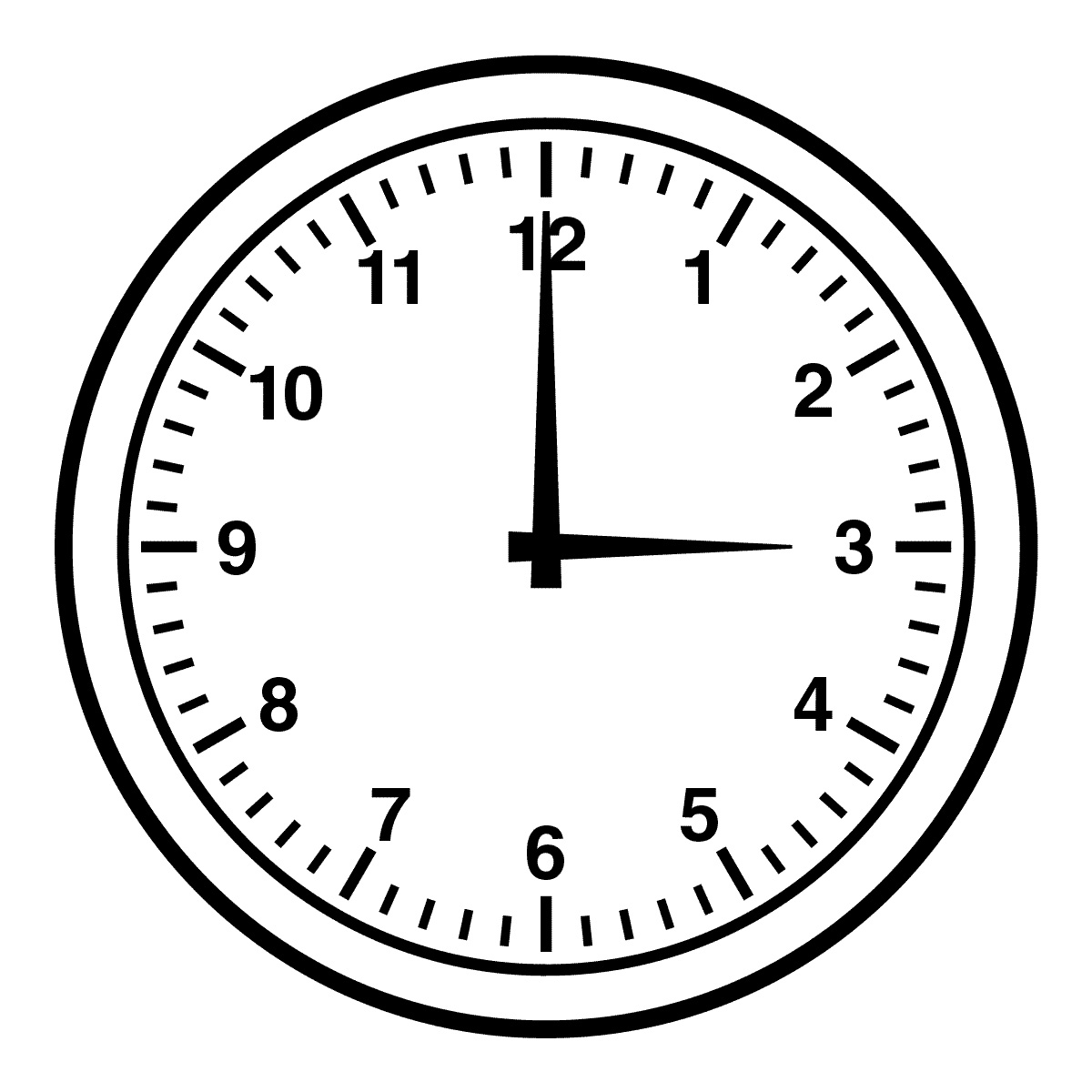
Es ist drei Uhr - It's 3 o'clock
Es ist Viertel vor zwei - It's quarter to two
Es ist fünf nach sieben - It's five past seven
Es ist zwanzig vor zehn - It's twenty to ten
Es ist genau vier - It's exactly four.
Es ist schon vier - It's four already.

Take note that it's a little confusing when you're saying half past in German. In English, we were taught to say it's half past the previous hour whereas in German we say it's half an hour before the following hour (TO the hour instead of half PAST the hour).
Es ist halb vier - It's half past three
Es ist halb fünf - It's half past four

To say at what time, use um.
„Wir sehen uns um halb drei”- "We'll meet at 2:30"


Another consideration is that there are two distinction when telling time in German: offiziel und in der Umgangssprache (official and "colloquial"). The 24-hour-clock is used in timetables and official schedules. Here's an example:

 Offiziel: Es ist 3 Uhr (morgens); Es ist 15 Uhr.   Umgangssprache: Es ist drei.